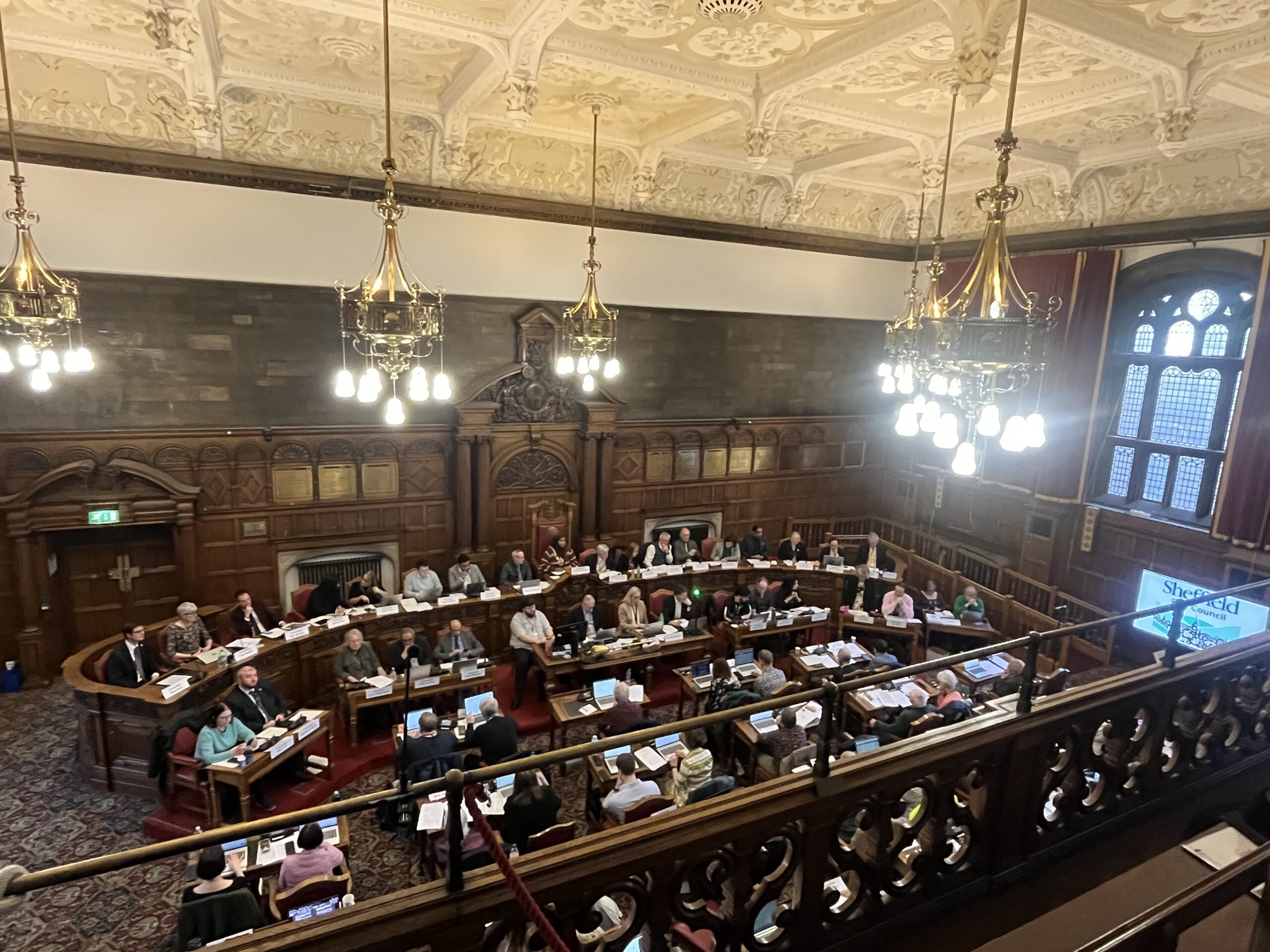
Members of the public strongly challenged Sheffield City Council’s spending plans at a tense meeting last week, with residents raising concerns about funding and proposed housing developments on green belt land.
Isabella France, 32, was the first of many to voice her concerns through the submission of a paper petition calling for a cut on council tax and appealing to the council to mount more pressure on central government for funding.
Arguing that the City had suffered severe reductions in support since 2010, she stated “we’ve lost around 50% of our funding,” adding that “cut after cut after cut of services was not always the status quo.”
Mrs France criticised what she described as the government’s strict “fiscal rules.” She urged councillors to push for more support, warning that “Sheffield is at breaking point and there’s nothing else to take from us… the city deserves better, please fight for it.”
Council representatives rejected claims that the budget amounted simply to cuts. They argued that failing to address equal pay obligations or continue investment in affordable housing would risk placing additional pressure on public health and other essential services.
Despite Mrs France’s petition, the council approved a 4.99% increase in council tax for the next financial year.
In response to concerns about council reserves, Councillor Douglas Johnson said “the majority of the remaining reserves are kept for specific activities” but did not say what those activities are, leading to groans from some members of the public at the meeting.
Housing affordability was another major concern raised by residents. The council said it plans to build 1,000 new council homes by 2029 and believes its local green belt strategy will increase affordable housing.
Further proposals regarding building houses on farmland triggered criticism. One anonymous resident warned: “When you remove farms you lose food… give it a few years,” likening its potential impacts to those of the “Holodomor famine” in the Soviet Union in 1932.
Campaigners also argued that planned industrial developments could damage communities, prompting heated exchanges and public uproar during the meeting.
Speaking after the meeting, Burngreave resident Abdullah Okud spoke to Shef Live and warned that “damp and mould” in the Northern area of Sheffield has become a major issue and a cause of asthma. He called on the council to do more to deal with this.