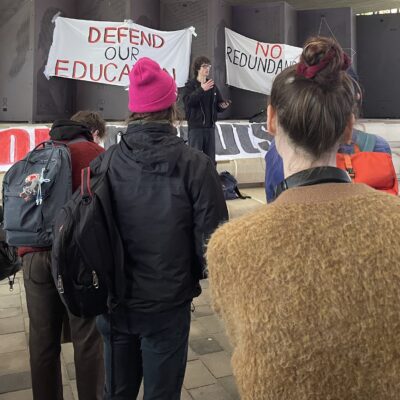
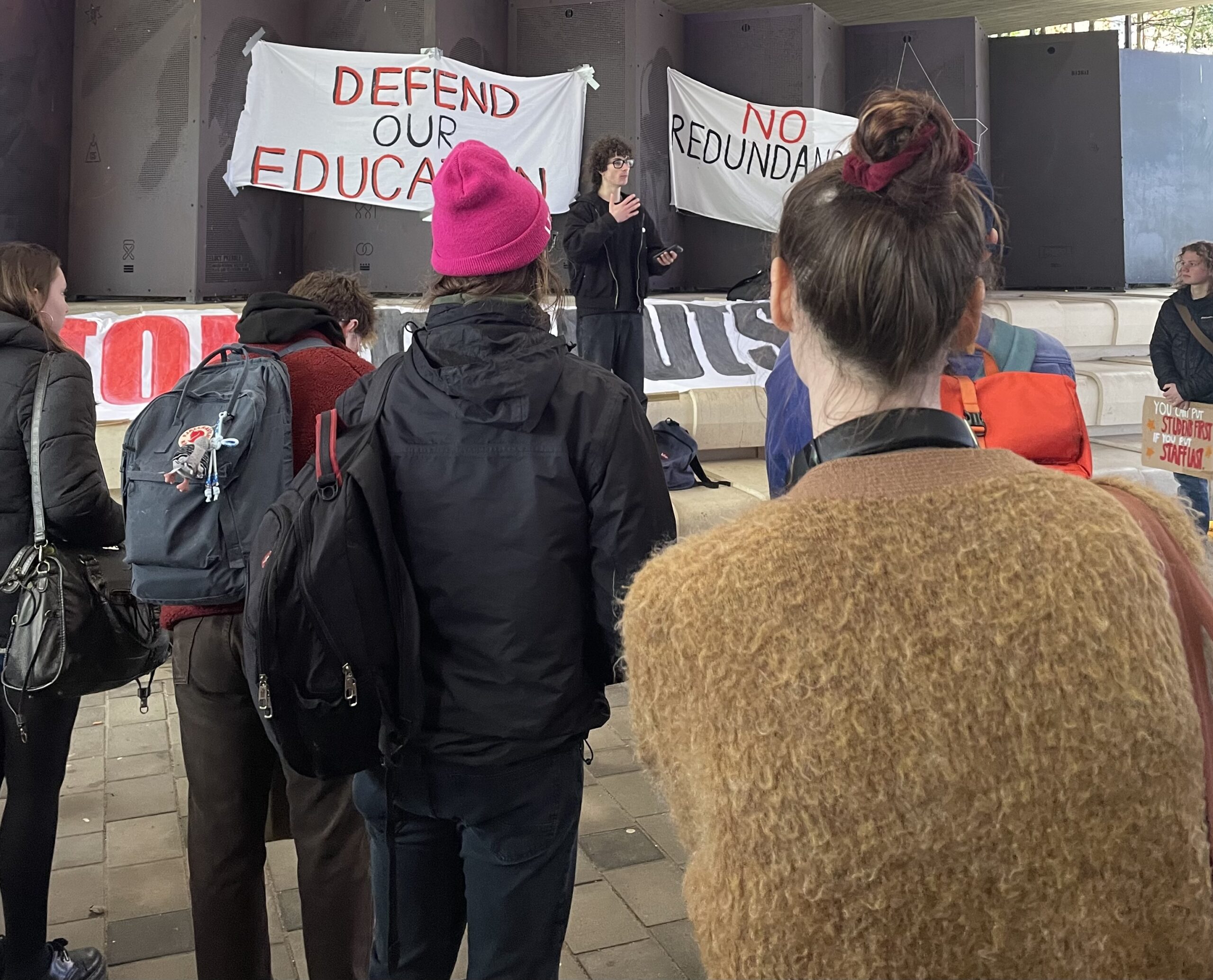
Students and teachers gathered for a major demonstration to protest budget cuts and job losses affecting both of Sheffield’s universities.
The protest took place at the University of Sheffield concourse but was also attended by students from Sheffield Hallam.
They were joined by representatives from the University and College Union (UCU), the Anti-Cuts Coalition, and student activists from across the country.
The protest, led by UoS student Casey Nelson, highlighted a growing sense of urgency. Nelson told the crowd that “every person at the university has been affected,” and urged students to maintain pressure on management to protect the long-term value of their degrees.

Sheffield Hallam aims to save £26.6 million this year, with £16 million coming from job cuts, and has warned of having to make “difficult choices” due to financial pressures across the sector. This follows the loss of about 1,000 staff members over the last two years.
Meanwhile, the University of Sheffield is tackling a £50 million budget gap by merging 45 departments into just 21.
Management says these moves are necessary because student numbers have dropped, but protesters point to the university’s £500 million in savings as a reason to avoid such drastic measures.
David Hayes, President of the UCU, said, “The more teachers have to do, the less they can do for you.”
Eli Thompson, the newly elected Students’ Union President, added to this, stating: “No more cuts to education, no more cuts to our staff, no more cuts to our future.”
Juniper Danilewicz, a second-year Mechanical Engineering student and founder of Sheffield Hallam Against Cuts, shared how these issues look in the classroom.
Danilewicz reported frequent lecture cancellations because no staff were available and a major drop in the speed of feedback for exams and coursework. Calling the cuts a “massive mistake,” Juniper warned that the university is ostracising its own community and creating “unliveable” conditions that force staff out.
“Our future, our education, our lives are all being cut. They are not going to give us our education, we must fight for it.”
“I hope more students and staff get involved in anti-cuts, and that we can fight back against the management, more unified and stronger together.”
The speakers concluded by urging every single teacher and student to stand up for themselves and to ask for financial compensation for any learning disruptions caused by the strikes.