
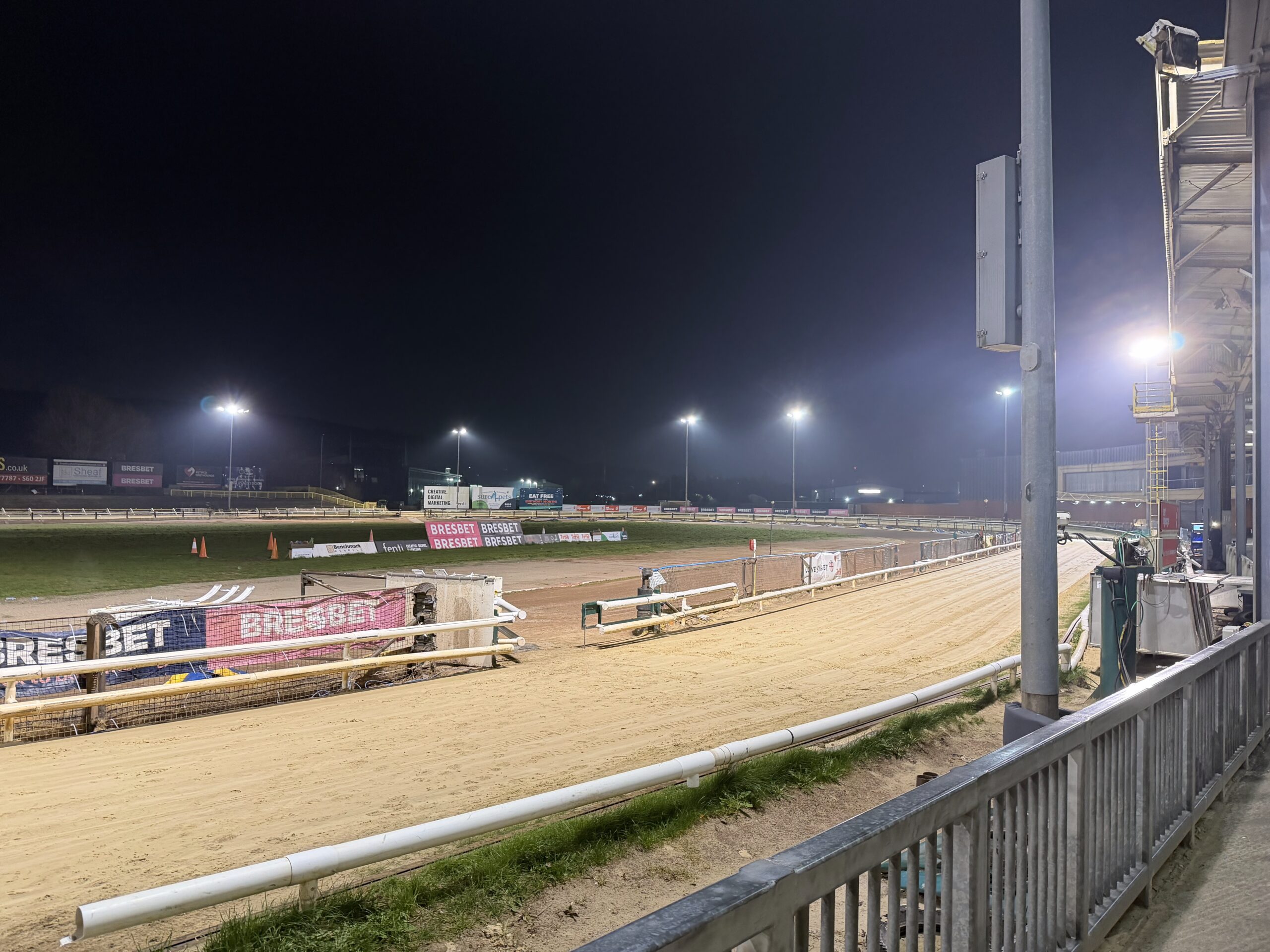
Greyhound racing has been subject to years of declining national interest, but the Owlerton track attracting around 300,000 visitors a year suggests the sport may be evolving rather than disappearing.
While crowds are “not compared to how it used to be,” a bookmaker at the track said, numbers over the past three to four years have “stayed around the same.”
The sport continues to rely heavily on an older, regular audience, but there is growing evidence of a shift. Sheffield’s large student population is beginning to reshape race nights, with younger visitors attending for social occasions rather than the traditional betting. This changing demographic is becoming increasingly important to the sport’s future.
Bob Chadwick, 67, a regular who attends “two or three times a month,” said the enduring appeal lies in the atmosphere as much as the racing. “There’s a great sense of camaraderie and a good community atmosphere, he said, arguing that Sheffields track “does very well” despite wider challenges facing the sport.
In a bid to attract new visitors, groups and first-time race goers, regular deals on food and drink, alongside package offers for events like birthdays, make it a more affordable option than many city-centre nights out. These incentives and offers, combined with the fast paced racing, are helping to draw in a young and more casual crowd.
Jhan, a student at the University of Sheffield student, attending for a friends birthday said he “never even knew it existed” before visiting, however described the experience as unique, welcome and accessible.
“The deals are great, the drinks are nicely priced and the food is great,” he said, adding that “the staff are extremely helping” in explaining how the racing and betting works.
Despite this, there are large challenges that the industry faces. Animal welfare concerns continue to shape public perception, something regulars dispute.
“People mistake greyhound racing for a cruel sport,” Chadwick said, “when in fact they are some of the most cared-for animals.”
Owlerton presents a picture of a sport in transition. While no longer at its peak, greyhound racing is finding ways to adapt with new, more diverse audiences.