
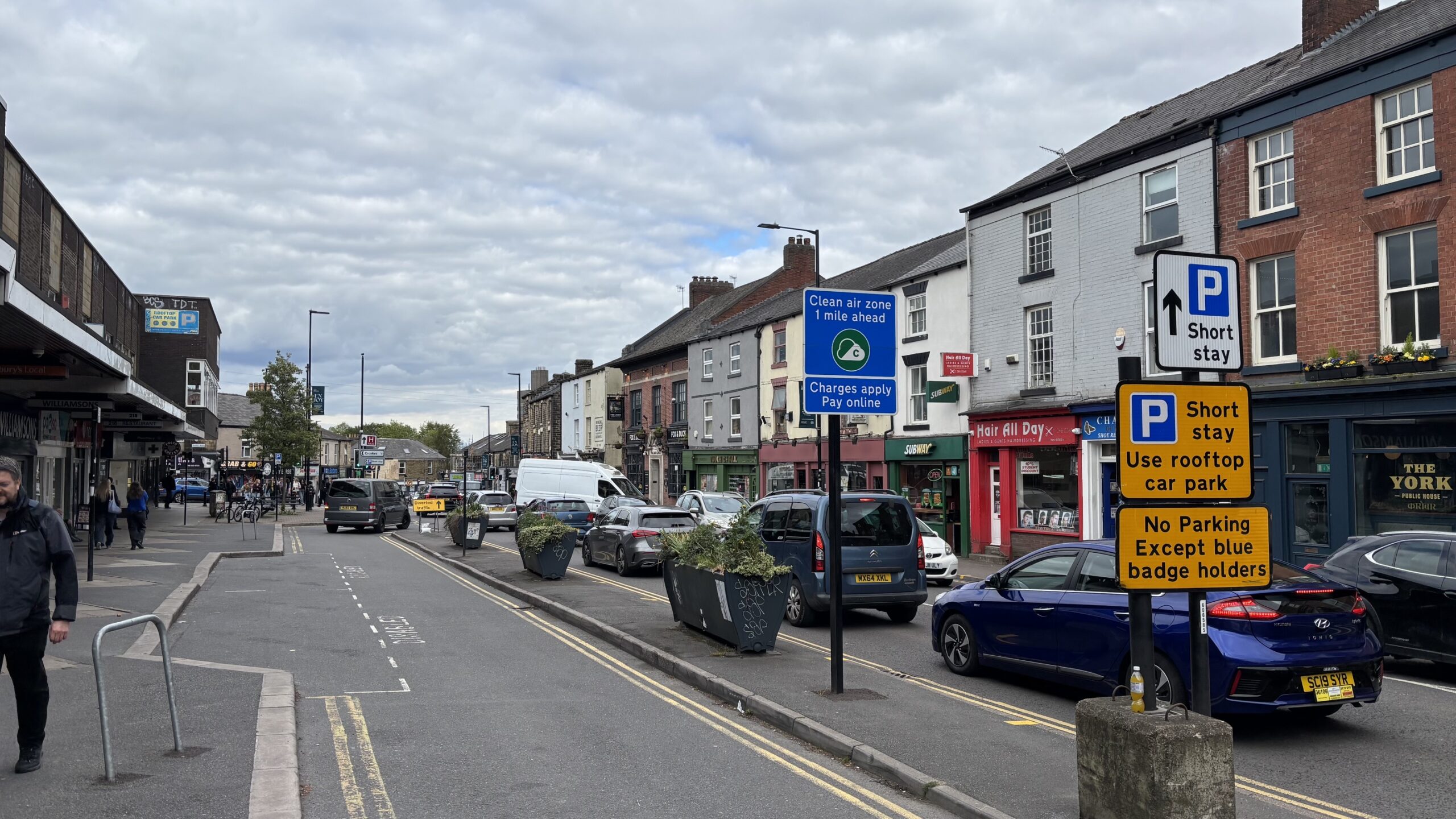
Even three years after Sheffield’s Clean Air Zone was introduced, business owners and taxi drivers have said it continues to have an impact on trade and increases operating costs.
After its launch in 2023, the Clean Air Zone means that taxis, coaches, vans, and HGVs that do not meet emissions standards will be charged between £10 and £50 per day to gain entry to parts of the Sheffield city centre.
The Sheffield City Council has previously emphasised not only the positive impact the Clean Air Zone has had on roadside pollution but also the millions of pounds in revenue it has raised.
However, some local businesses argue that the financial impact of the CAZ remains significant.
Tony Gallagher, director of Yorkshire Decorator’s Centre, which was left with little choice but to relocate from its original city-centre premises after the CAZ was introduced, has commented on its counter-productive nature.
He said: “Tradesmen with vans are now going around the city, so all that air they’re expelling from the centre is going to the residential areas around Sheffield.”
The CAZ also continues to affect the earnings of taxi drivers, especially for those whose vehicles do not meet the emissions standards.
Amir Tariq, a local taxi driver, mentioned difficulties the Clean Air Zone has caused for many taxi drivers in Sheffield.
He said: “I know a lot of people who were affected by it.
“Of course it was really bad, but the council provided some money to buy a new car.”
Online reaction from residents and other locals suggests that widespread frustration is still prominent.
In comments posted online, Simon Wilkinson, a resident of Sheffield, has expressed his disagreement with the financial pressure that the CAZ puts on drivers in Sheffield.
He said: “If all the vehicles that get charged go into the area, then it’s not a clean air zone is it? It’s then just a charge zone.”
Sheffield city council has consistently confirmed that the main principle behind the CAZ is to positively impact public health and nitrogen dioxide emissions, particularly around the ring road and surrounding routes.
The council says it continues to monitor both air quality levels in the city and the winder economic impact of the scheme.